





Why Your Nails Are Weak and What Nature Can Do About It
Here’s the Ayurvedic perspective most people never hear: your nails are a mirror of your deepest tissues. In Ayurveda’s understanding, the body nourishes itself in layers, starting with blood plasma and ending with reproductive tissue. Bone tissue (asthi dhatu) falls near the end of that chain, and nails are its waste product, or “mala.” So when nails are thin, cracking, or growing slowly, the issue isn’t at the surface. It’s a sign that nourishment isn’t reaching your bones properly.
The root cause (what Ayurveda calls nidana) is often a combination of poor digestion and lifestyle habits that increase dryness, roughness, and instability in the body. In dosha terms, that’s usually excess Vata, the energy of air and space, driving qualities like dry, light, rough, and mobile into your tissues. But Pitta and Kapha types experience nail trouble differently too.
If you tend toward Pitta, you might notice soft nails that bend easily, or nails with a reddish or yellowish tint. That’s the hot and sharp qualities of Pitta affecting the tissue. If you lean Kapha, your nails may grow thickly but slowly, sometimes with a pale, dull appearance, reflecting the heavy and cool qualities of Kapha in excess.
When any dosha goes out of balance, it disrupts agni, your digestive and metabolic intelligence. And when agni weakens, undigested residue called ama starts to accumulate. Ama is sticky, heavy, and dull. It clogs the channels that carry nutrients to deeper tissues like bone and, by extension, your nails.
So the real question isn’t “what cream do I put on my nails?” It’s “how do I clear the pathway so nourishment actually arrives?”
Nature gives us everything we need: warming spices to rekindle digestion, nourishing oils to counter dryness, mineral-rich foods to feed bone tissue, and daily rhythms that keep the whole system humming.
Do this today: Take a close look at your nails under natural light. Notice color, texture, ridges, and thickness. This simple observation, done in about two minutes, gives you a baseline. It’s for anyone, though if you’re dealing with a medical nail condition, please work with a qualified practitioner first.
Nutrient-Rich Foods That Strengthen Nails From the Inside Out
In Ayurveda, food isn’t just fuel, it’s medicine. And for nail health, the foods that matter most are those that nourish asthi dhatu (bone tissue) and support strong agni so nutrients actually get absorbed.
Let’s start with agni and ama, because this is where everything either works or falls apart. If your digestive fire is low, maybe you feel sluggish after meals, notice a coating on your tongue in the morning, or experience bloating, then even the most nutrient-dense meal won’t fully reach your nails. That sticky, undigested residue (ama) blocks the subtle channels. You can eat all the calcium and biotin in the world, but if agni is weak, it’s like pouring water into a clogged pipe.
To strengthen agni, I like to start meals with a thin slice of fresh ginger sprinkled with a pinch of mineral salt and a few drops of lime. It’s a simple, traditional practice that wakes up your digestive fire, bringing in warm, sharp, and light qualities to counter the dull and heavy nature of ama.
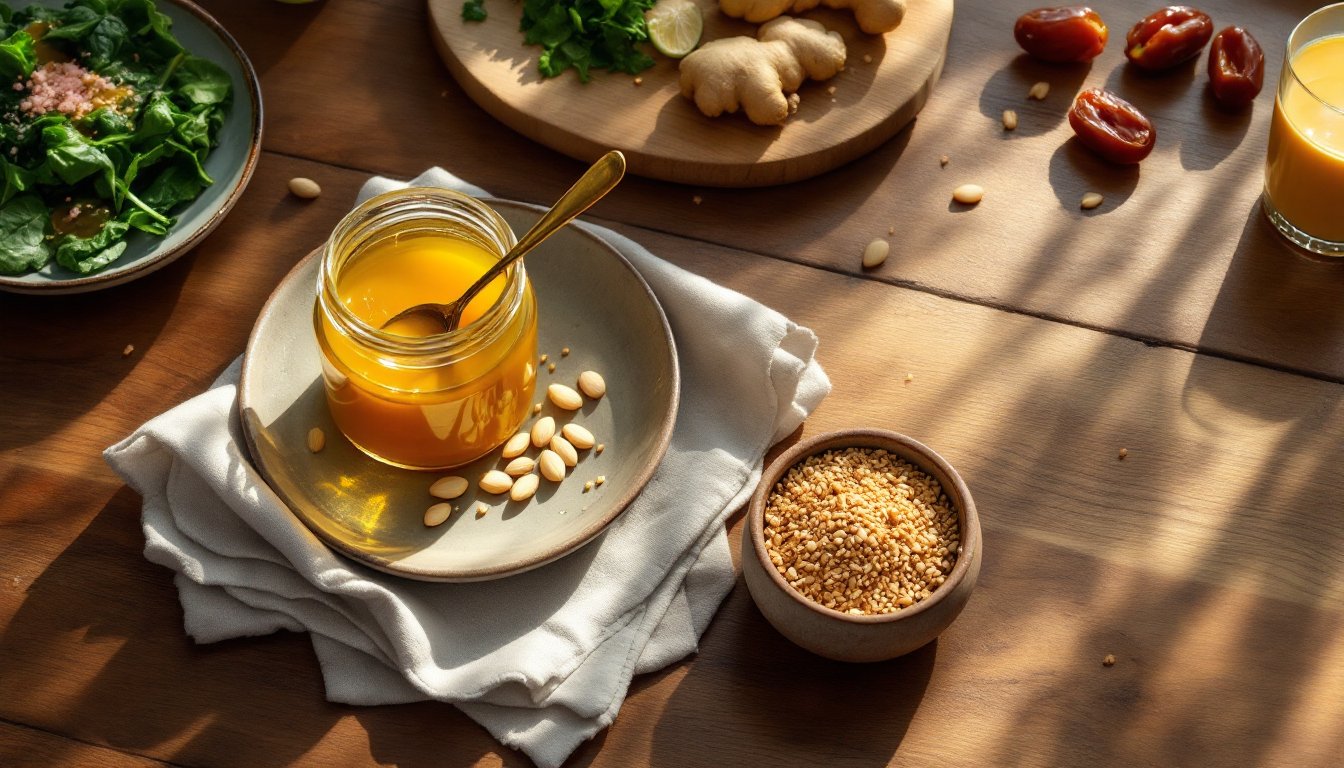
Now, for the foods themselves. Sesame seeds are a powerhouse, they’re oily, warm, and heavy, which directly pacifies Vata’s dry, rough tendencies while delivering calcium to bone tissue. Cooked leafy greens (not raw salads, which can be too cold and light for Vata types) offer iron and minerals in a form your body can actually use. Ghee is another gem. It’s smooth, oily, and cooling enough to balance Pitta, yet it carries nutrients deep into the tissues. A teaspoon of ghee with your lunch is one of the simplest things you can do for your nails.
Almonds soaked overnight and peeled in the morning are excellent too, they become lighter and easier to digest while retaining their nourishing, oily quality. Dates, warm milk spiced with a pinch of turmeric, and well-cooked lentils round out the picture.
All of this connects to the vitality triad. When digestion is strong and nourishment reaches deep tissues, you build ojas, that baseline resilience and glow. Your tejas, the metabolic spark that governs how well tissues transform and renew, stays bright. And prana, your life energy, flows more steadily because the body isn’t constantly fighting to compensate for deficiencies.
Do this today: Add one tablespoon of sesame seeds (lightly toasted) and a teaspoon of ghee to your lunch. Takes about three minutes to prepare. This is great for all body types, though Kapha-predominant folks might use half the ghee and add a pinch of black pepper instead.
DIY Soaks and Oils for Healthier, More Resilient Nails
While internal nourishment does the heavy lifting, external care matters too, especially for balancing the dry, rough qualities that make nails crack and peel.
Ayurveda’s principle here is beautifully simple: like increases like, and opposites bring balance. If your nails are dry and brittle (excess Vata qualities, dry, rough, light), you apply something oily, smooth, and warm. That’s not just folk wisdom. It’s a logical system built on qualities, or gunas.
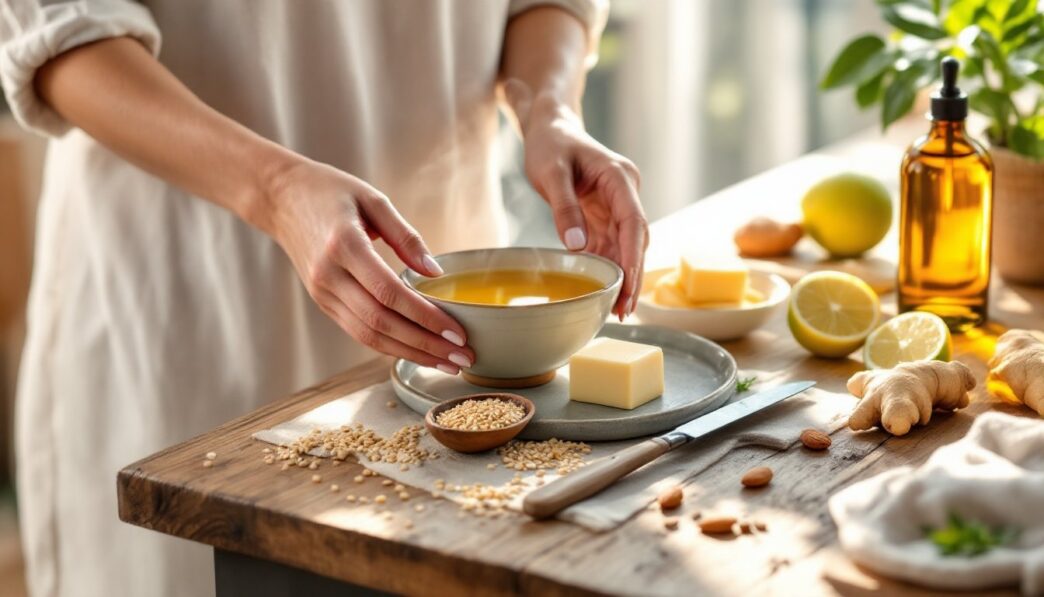
My favorite external remedy is a warm sesame oil soak. Gently heat a small bowl of organic sesame oil until it’s comfortably warm, never hot. Dip your fingertips in for about ten minutes. Sesame oil is warm, heavy, and penetrating. It moves through the nail bed and surrounding skin, counteracting Vata’s dryness at the local level. If you’re more Pitta, coconut oil is a better choice, it’s cool and smooth, which calms the heat and sharpness Pitta brings.
For a slightly more involved treatment, try mixing warm sesame oil with a few drops of lemon juice and a tiny pinch of turmeric. The lemon brings a mild sharpness that helps clear surface-level ama (think discoloration or dullness on the nail), while turmeric’s subtle, warm quality supports tissue repair.
Another approach: a simple milk and honey soak. Warm a cup of whole milk with a teaspoon of raw honey. The milk is cool, smooth, and nourishing, wonderful for Pitta types or anyone whose nails feel inflamed. Honey adds a light, scraping quality that gently clears stagnation without being harsh.
After any soak, gently massage the oil or moisture into each nail and cuticle. This isn’t just about hydration, in Ayurveda, touch and massage move prana through the extremities, supporting circulation and tissue vitality.
Do this today: Try a warm sesame oil fingertip soak for ten minutes this evening. It’s calming enough to double as a wind-down ritual before bed. Ideal for Vata and Kapha types. Pitta types can swap in coconut oil. If you have a fungal nail infection, skip soaks and consult a practitioner.
Herbal and Plant-Based Treatments Worth Trying
Ayurveda’s herbal tradition offers some genuinely effective tools for nail strength, and they work because they target the deeper tissue layers, not just the nail surface.
Ashwagandha is one I come back to again and again. It’s warm, oily, and heavy, the exact opposite of Vata’s dry, light, mobile pattern. It nourishes bone tissue (asthi dhatu) directly and supports ojas, that deep reservoir of resilience. I usually suggest it as a half-teaspoon of powder stirred into warm milk before bed. The timing matters here: evening is Kapha time (roughly 6–10 PM), when the body naturally shifts toward rest and repair. Taking nourishing herbs during this window amplifies their tissue-building effect.
Then there’s Guduchi (sometimes called Giloy), which is bitter and light yet deeply balancing. It’s particularly useful when ama is part of the picture, if your nails are discolored, ridged, or growing unevenly. Guduchi’s light, clear quality helps scrape away metabolic residue without depleting your energy. It also stokes tejas, that inner clarity and metabolic brightness.
Triphala, the classic three-fruit formula, is worth mentioning here too. It’s one of Ayurveda’s most versatile preparations because it gently balances all three doshas. It supports agni, helps move ama out of the system, and keeps elimination regular, which matters because sluggish elimination means toxins recirculate and deposit in tissues. A quarter-teaspoon in warm water before bed can work wonders over a few weeks.
For topical use, neem oil applied directly to the nails is cooling, bitter, and light, perfect for Pitta-type nail issues like softness, redness, or mild inflammation. Kapha types might prefer a blend with a few drops of eucalyptus, which is light and penetrating.
One thing to remember: herbs work gradually. Nails grow slowly, roughly three to six months for a full replacement. Be patient with yourself.
This is general education, not medical advice. If you’re pregnant, managing a condition, or taking medication, check with a qualified professional.
Do this today: Try half a teaspoon of ashwagandha powder in warm milk this evening. It takes about five minutes to prepare. Wonderful for Vata and Kapha types. Pitta-dominant individuals might prefer guduchi or shatavari instead, since ashwagandha’s warmth can sometimes aggravate Pitta.
Daily Habits That Protect and Nourish Your Nails Naturally
Here’s something I’ve learned: the fanciest herbal protocol won’t compensate for a chaotic daily rhythm. In Ayurveda, dinacharya (daily routine) is the foundation everything else rests on. Your nails respond to consistency the way a garden responds to regular watering.
Two Daily Habits That Make a Real Difference
The first is abhyanga, warm oil self-massage. I know, I know, it sounds like a big production. But even massaging warm sesame oil into your hands and feet for five minutes each morning can shift things. The oil is warm, heavy, smooth, and stable, it directly counterbalances Vata’s restless, dry, rough tendencies. And when you massage the nail beds specifically, you’re driving nourishment right where it’s needed while moving stagnant prana through the fingertips.
The second is eating your largest meal at midday. Between roughly 10 AM and 2 PM, Pitta governs the day, and that means agni is naturally at its strongest. When you eat your most nutrient-dense, mineral-rich food during this window, absorption is at its peak. Those nutrients have the best chance of traveling through all seven tissue layers to reach your bones and nails. Eating heavy meals at night, when agni is low, creates ama and starves the deeper tissues.
If You’re More Vata, Pitta, or Kapha
Vata types, your nails are likely the most affected by stress, irregular meals, travel, and cold weather. You’ll want to emphasize warm, oily, grounding foods and stick to a very regular routine. Try the sesame oil soak three times a week, and don’t skip meals. Avoid excessive raw foods and iced drinks, their cold, light, rough qualities make everything worse.
Pitta types, your nails may be softer or prone to redness. Focus on cooling, smooth foods like cucumber, coconut, and sweet fruits. Use coconut oil externally. Try to avoid harsh nail products and too much hand-washing with hot water, the sharp, hot quality aggravates your nails. Consider an aloe vera and rose water soak once a week.
Kapha types, your challenge is often slow growth and dullness rather than breakage. You benefit from lighter, warming foods and dry brushing before your morning shower to stimulate circulation. Add ginger and black pepper to meals. Avoid heavy, oily foods at dinner, and try the triphala before-bed routine to keep elimination and metabolism active.
Do this today: Choose one of the two daily habits, either the five-minute hand oil massage or shifting your main meal to midday, and try it for one week. It takes minimal extra time and works for every body type. If you’re unsure of your predominant dosha, start with the midday meal shift: it benefits everyone.
Seasonal Adjustments for Your Nails
Nails tend to be at their worst in late autumn and winter, when Vata season brings cold, dry, windy weather. Everything that’s already dry gets drier. This is when you want to increase oily, warm, heavy foods and external oil applications. Think more ghee, more sesame oil soaks, more cooked root vegetables.
In summer, Pitta season, nails may soften or get inflamed more easily. Shift to cooling oils (coconut, sunflower) and favor sweet, bitter foods. In spring’s damp Kapha season, keep things light and stimulating: dry brushing, warming spices, and lighter meals prevent the sluggishness that slows nail growth.
Do this today: Identify which season you’re currently in and make one adjustment. In cool or dry weather, add an extra tablespoon of ghee to your day. In warm weather, switch your external oil to coconut. Takes about one minute of awareness. Suitable for all types.
A Quick Note on Modern Life
I find it interesting that modern research increasingly points to gut health, nutrient absorption, and stress management as key factors in nail strength, all things Ayurveda has been addressing for thousands of years through agni, ama, and nervous system balance (prana). You don’t have to choose between ancient wisdom and modern understanding. They’re saying much the same thing, just in different languages.
Do this today: If you’ve been focused only on topical nail treatments, take five minutes to reflect on your digestion, your stress levels, and your daily rhythm. That internal awareness is where lasting nail health begins. This reflection works for everyone, no exceptions.
Conclusion
Stronger nails aren’t built with chemical hardeners or quick fixes. They’re built layer by layer, from the inside, through steady digestion, nourishing food, the right oils, meaningful herbs, and a daily rhythm that actually supports your body’s deepest tissues.
What I love about the Ayurvedic approach to nail health is that it doesn’t ask you to buy into a complicated system. It asks you to pay attention. To notice your nails, your digestion, your energy. And then to make small, thoughtful adjustments, one warm oil soak, one midday meal, one calming herb before bed, that compound over time into real, visible change.
Your nails will tell you when things are working. Trust them.
I’d love to hear where you’re starting. What’s the first thing you’re going to try? Drop a thought in the comments, and if this resonated, share it with someone who’s been battling brittle nails. Sometimes the simplest path forward is the one nobody’s told us about yet.