
Why Most Cleaning Products Are Unnecessary (And Potentially Harmful)
Here’s something that took me way too long to realize: the cleaning product industry thrives on convincing us we need specialized solutions for every single task. A degreaser for the stovetop. A descaler for the faucet. An antibacterial spray for the counter. A separate antibacterial spray for a different counter, apparently.
But when you look at what cleaning actually involves, dissolving grease, cutting through grime, removing bacteria, eliminating odors, you start to see that the same basic chemistry handles most of it. We’ve just been sold increasingly specific packaging for overlapping functions.
The bigger concern, though, is what we’re inviting into our homes in the process.
What’s Actually in Conventional Cleaners
Most conventional cleaning products contain a cocktail of synthetic chemicals that do raise legitimate questions. Phthalates show up in fragranced products and have been linked to endocrine disruption. Triclosan, once a darling of antibacterial marketing, was banned from hand soaps by the FDA back in 2016 but still appears in some household cleaners. Volatile organic compounds (VOCs) in aerosol sprays contribute to indoor air pollution, and the EPA has noted that indoor air can be two to five times more polluted than outdoor air, partly because of products we use to “clean.”
Then there are the ingredients you’ll never even see on the label. In the US, cleaning product manufacturers aren’t required to disclose their full ingredient lists. That “fragrance” listed on the back of your all-purpose spray? It could contain dozens of undisclosed chemicals.
I’m not trying to scare anyone. Most of these products won’t cause immediate harm from occasional use. But the cumulative exposure, day after day, in a closed home, is what made me reconsider. Especially when I realized I could get the same results with ingredients I could actually pronounce.
The 5 Essentials of a Non-Toxic Cleaning Kit
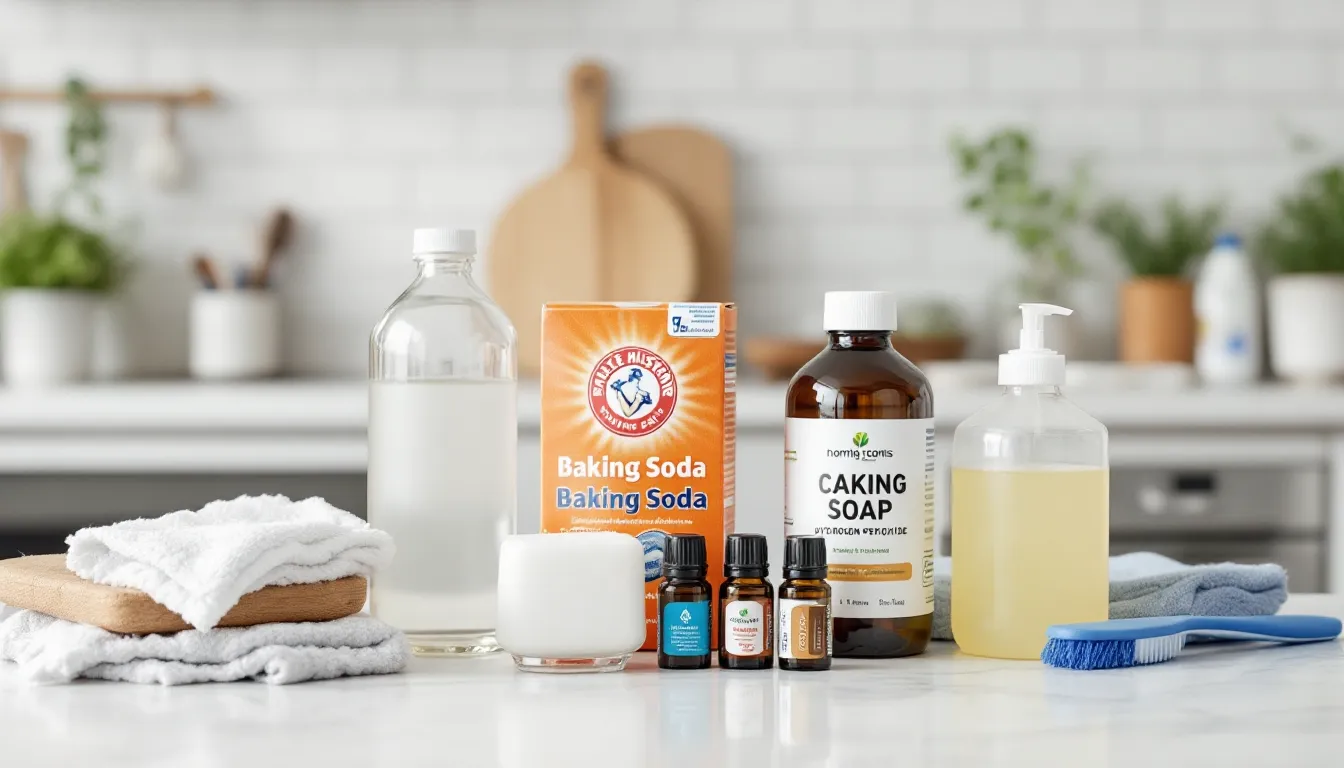
This is the core of the whole approach. Five ingredients. That’s it. Each one pulls serious weight, and together they cover almost every cleaning scenario you’ll encounter in a normal household.
White Vinegar: The All-Purpose Workhorse
White distilled vinegar is probably the single most versatile non-toxic cleaning ingredient you can own. Its acidity (typically around 5% acetic acid) makes it effective at dissolving mineral deposits, cutting through grease, and killing many common bacteria.
I use it diluted 1:1 with water for countertops, stovetops, and appliance exteriors. Full strength, it handles hard water stains on faucets and showerheads beautifully. The smell dissipates within minutes once it dries, something I was skeptical about until I tried it.
One important caveat: don’t use vinegar on natural stone like marble or granite. The acid can etch the surface over time. And never mix it with bleach or hydrogen peroxide in the same bottle, the chemical reactions aren’t safe.
Baking Soda: The Gentle Abrasive You Already Own
Baking soda is mildly alkaline and slightly gritty, which makes it a perfect gentle scrubbing agent. I reach for it whenever I need physical cleaning power without scratching, think baked-on food in a pan, stains in the sink, or grungy grout lines.
It also neutralizes odors rather than just masking them. A small open container in the fridge, a sprinkle in the trash can, a dusting inside shoes, it actually absorbs the acidic and alkaline molecules that cause smells.
Mixed into a paste with a little water, baking soda becomes a surprisingly effective soft scrub. I’ve used it on everything from ceramic cooktops to stained coffee mugs.
Castile Soap: One Bottle for Every Surface
Castile soap is a true soap made from plant oils, traditionally olive oil, though many modern versions include coconut or hemp oil. It’s biodegradable, concentrated, and genuinely multipurpose.
A few drops in warm water cleans floors. A tablespoon in a spray bottle with water handles general surface cleaning. It even works for hand washing dishes, though it doesn’t suds up quite like conventional dish soap, which threw me off at first. You get used to it.
The key with castile soap is that a little goes a long way. I buy one large bottle every few months, and it handles mopping, surface spraying, and even occasional laundry pretreating.
Don’t mix castile soap directly with vinegar, though. The acid in the vinegar reacts with the soap and creates a white, filmy residue, basically undoing the cleaning power of both. Use them in sequence if needed, not combined.
Hydrogen Peroxide: A Safer Disinfectant
When I genuinely need to disinfect, after someone’s been sick, on cutting boards that handled raw meat, or in the bathroom, hydrogen peroxide is my go-to. The standard 3% concentration you find at any drugstore is effective against a wide range of bacteria, viruses, and molds.
It breaks down into water and oxygen, which is about as clean as a disinfectant gets. I keep it in a dark spray bottle (light degrades it) and use it straight on surfaces, letting it sit for a few minutes before wiping.
It’s also surprisingly good at removing stains. Blood on fabric, yellowed grout, tea-stained mugs, hydrogen peroxide handles all of these without the harshness of chlorine bleach.
Essential Oils: Optional but Effective Boosters
I want to be honest here, essential oils aren’t strictly necessary for effective cleaning. But they do add something. Tea tree oil has well-documented antimicrobial properties. Lemon oil cuts grease and leaves a clean scent without synthetic fragrance chemicals. Lavender is mildly antibacterial and makes the whole experience more pleasant.
I add about 10–15 drops to a spray bottle of my vinegar-water solution. That’s it. They’re a bonus, not the backbone.
If you’re sensitive to strong scents or have pets (cats especially can be sensitive to certain essential oils), feel free to skip them entirely. The other four ingredients do the heavy lifting.
How to Mix and Store Your Non-Toxic Cleaning Solutions
One of the things I love about this approach is how simple the formulas are. You don’t need measuring cups or chemistry knowledge. Here are the three solutions I keep on hand at all times.
All-purpose spray: Equal parts white vinegar and water in a spray bottle. Add 10–15 drops of essential oil if you like. I use this on kitchen counters, appliance surfaces, inside the microwave, and for quick bathroom wipe-downs.
Soft scrub paste: Baking soda plus just enough water to form a thick paste. I make this fresh each time I need it, takes about ten seconds. Great for sinks, tubs, stovetops, and any surface that needs a little extra scrubbing.
General cleaning spray: About one tablespoon of castile soap in a 16-ounce spray bottle filled with water. This is my go-to for mopping floors (a capful in a bucket), wiping down painted surfaces, and cleaning kids’ toys.
For storage, glass spray bottles are ideal since vinegar can slowly degrade some plastics over time. But standard spray bottles work fine for shorter-term use, I replace mine every few months. Keep the hydrogen peroxide in its original dark bottle or transfer it to an opaque spray container, since light breaks down the active ingredient.
Label everything. I know this sounds obvious, but when you have three clear spray bottles on a shelf, it’s surprisingly easy to grab the wrong one.
Room-by-Room Guide: Cleaning Your Entire Home With Five Ingredients
This is where it all comes together. I’ll walk through how I actually use these five ingredients throughout my home, no theoretical recipes, just what I do week to week.
Kitchen and Dining Areas
The kitchen is where my all-purpose vinegar spray gets the most action. I wipe down countertops, the exterior of the fridge, the stovetop (after it cools), and the dining table with it daily. For baked-on food or greasy spots on the stove, I sprinkle baking soda, spray vinegar over it, let the fizzing do its thing for a minute, then wipe clean.
For the sink, I scrub with baking soda paste once a week. It brightens stainless steel without scratching. After prepping raw chicken or meat, I spray hydrogen peroxide on the cutting board and counter, let it sit for five minutes, then wipe and rinse.
The inside of the microwave? A bowl of water with a splash of vinegar, microwaved for three minutes. The steam loosens everything, and you just wipe it out. This is one of those tricks that feels almost too easy to be real, but it works every time.
Bathrooms and Toilets
Bathrooms are where hydrogen peroxide and baking soda really earn their keep. I spray hydrogen peroxide on the toilet seat, handle, and rim, let it sit while I clean other things, then wipe down. For the bowl itself, I sprinkle baking soda inside, add a splash of vinegar, let it fizz, then scrub with a toilet brush.
The shower gets a spray of vinegar-water solution after each use, this alone has dramatically reduced soap scum buildup for me. For deeper cleaning, I make a baking soda paste and scrub the tub and tile, then rinse. Grout that’s starting to look dingy gets a treatment of hydrogen peroxide applied directly, left for ten minutes, then scrubbed with an old toothbrush.
Mirrors and glass get a simple spray of vinegar-water wiped with a lint-free cloth or old newspaper. Streak-free, every time.
Floors, Windows, and General Surfaces
For hard floors, tile, laminate, sealed hardwood, I add a small squirt of castile soap to a bucket of warm water. That’s my mop solution. It doesn’t leave residue the way many commercial floor cleaners do, and the floors actually feel clean rather than tacky.
Windows get the same vinegar-water treatment as mirrors. I clean them on overcast days when possible, since direct sunlight can dry the solution before you wipe it, causing streaks.
For dusting wood furniture, I occasionally make a simple polish with olive oil and a few drops of lemon essential oil on a soft cloth. It conditions the wood and smells wonderful. I don’t do this every week, maybe once a month, but it keeps wooden surfaces from looking dried out.
Common Mistakes to Avoid With DIY Cleaners
I’ve made most of these mistakes myself, so consider this a shortcut past my learning curve.
Mixing vinegar and castile soap together. I mentioned this earlier, but it bears repeating. The acid neutralizes the soap, creating an oily residue that’s harder to clean up than whatever you were originally trying to clean. Use one, rinse, then use the other if you need both.
Mixing vinegar and hydrogen peroxide in the same container. This creates peracetic acid, which can irritate your skin, eyes, and lungs. You can use them on the same surface sequentially, spray one, wipe, then spray the other, but never combine them in a single bottle.
Using vinegar on natural stone. Marble, granite, and other natural stones are sensitive to acid. Over time, vinegar will dull and etch the finish. For stone countertops, stick with a diluted castile soap solution.
Making huge batches. These solutions work best fresh. The vinegar spray keeps well, but the baking soda paste dries out, and hydrogen peroxide loses potency once exposed to light and air. Mix what you need, when you need it.
Expecting instant results on years of buildup. If you’re transitioning from conventional cleaners, some surfaces may have residue buildup that takes a few cleaning sessions to fully remove. Give it a couple of weeks. The non-toxic approach works, but it sometimes works on a slightly different timeline than the chemical-heavy approach you’re replacing.
How This Minimal Kit Saves Money and Reduces Waste
Let me put some numbers to this, because the savings genuinely surprised me.
A gallon of white vinegar costs roughly $3–4. A large box of baking soda runs about $1. A 32-ounce bottle of castile soap is around $12–16, but it lasts months because you dilute it heavily. A bottle of hydrogen peroxide is under $2. And a small bottle of essential oil, if you choose to include it, runs $8–12 and lasts a very long time at 10 drops per batch.
All told, my annual cleaning supply cost dropped from somewhere around $150–200 to about $30–40. That’s not life-changing money, but it’s meaningful, especially multiplied over years.
The waste reduction is even more striking. I went from buying a dozen plastic spray bottles and containers per year to refilling three or four glass bottles indefinitely. No more aerosol cans, no more single-use wipe containers, no more half-used bottles of specialty cleaners cluttering the cabinet.
There’s a less tangible benefit too. Simplicity itself is a kind of relief. Knowing exactly what’s in every bottle, knowing I won’t run out of some obscure product mid-clean, knowing my kids can be in the room while I’m cleaning without me worrying, that peace of mind has been worth more to me than the dollar savings.
And honestly, my home is cleaner now than it was before. Not because the products are magic, but because simplicity removed the friction. When cleaning is easy and non-intimidating, you do it more often. That regular upkeep turns out to be more effective than any heavy-duty chemical blitz once a month.
Conclusion
Switching to a non-toxic cleaning kit isn’t about being perfect or militant about ingredients. It’s about realizing that most of what the cleaning aisle sells us is redundant, and that a few humble pantry staples can do the job just as well, often better, without the chemical question marks.
If you’re feeling overwhelmed, start small. Grab a bottle of white vinegar and a box of baking soda this week. Try the all-purpose spray on your kitchen counters. See how it feels. You don’t have to throw out everything under the sink tomorrow.
Small shifts add up. A cleaner home, a lighter environmental footprint, a few extra dollars in your pocket, and the quiet satisfaction of knowing exactly what you’re spraying on the surfaces where your family eats, sleeps, and lives.
This is general education, not medical advice. If you have sensitivities, allergies, or health conditions, consult a qualified professional before making changes to your household products.
I’d love to hear from you, what’s the first non-toxic swap you’re going to try? Drop a comment below or share this with someone who’s been curious about simplifying their cleaning routine.