
The Roots of Ayurveda and Its View on Nourishment
Ayurveda translates loosely to “the wisdom of life.” It grew out of careful observation, people watching how the body responds to weather, seasons, emotions, and meals, and writing it all down over generations. What I love is that it never treats food as separate from the rest of you. Your lunch is part of your nervous system, your sleep, your mood, your skin.
In this view, food isn’t just calories or macros. It carries qualities, hot or cool, light or heavy, dry or oily, sharp or dull, mobile or stable. Those qualities meet the qualities already inside you and either soothe them or stir them up. A heavy, oily meal on a damp, cold day in someone already feeling sluggish? That’s stacking heavy on heavy. The body protests.
Ayurveda also pays close attention to what it calls prana (the subtle life force in fresh food), tejas (the spark that transforms what you eat into clarity), and ojas (the deep reserve of resilience built from well-digested meals over time). When you eat in a way that protects all three, food genuinely becomes medicine.
Try this today: Before your next meal, pause for three slow breaths and notice the qualities on your plate, is it warm or cold, light or heavy? Takes 30 seconds. Great for almost anyone: skip if pausing before eating feels stressful rather than steadying.
Understanding the Three Doshas and Their Dietary Needs
Ayurveda describes three doshas, Vata, Pitta, and Kapha, as patterns of energy that show up in everyone, just in different ratios. Think of them as your body’s weather system. Vata is the windy, mobile, dry quality. Pitta is the hot, sharp, transforming quality. Kapha is the cool, heavy, stable quality.
When one runs high, food is one of the fastest ways to bring it back into balance. The principle is simple: opposites balance. If you’re feeling scattered and cold (Vata high), you don’t pile on more cold and dry. You bring in warm, grounding, slightly oily foods. The same logic guides Pitta and Kapha.
Vata: Foods to Ground and Stabilize
If Vata is your main constellation, or it’s spiked because of travel, stress, or a long to-do list, your system feels rough, light, mobile. Cold salads and crackers will likely leave you wired and tired.
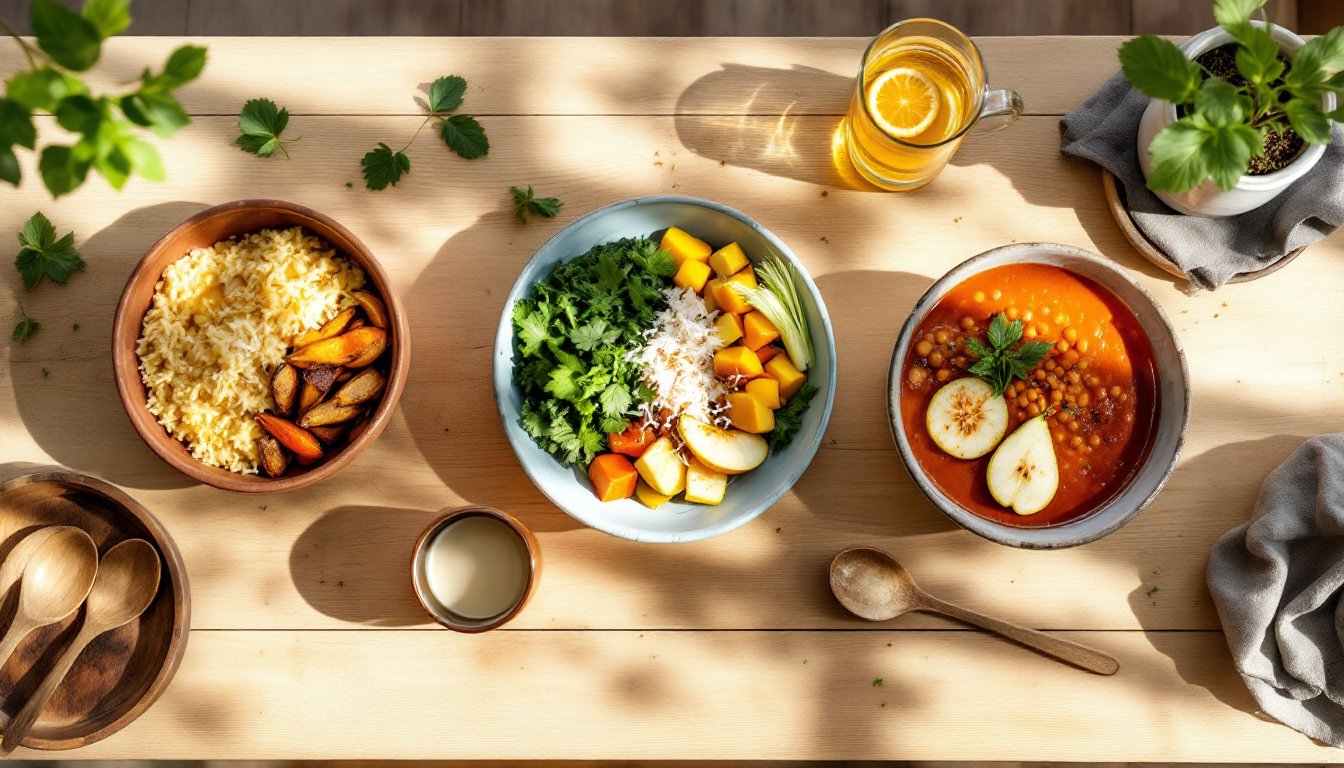
What helps me when my Vata is up: warm cooked grains like oats or basmati rice, root vegetables roasted with ghee, soups, stewed fruit, warm spiced milk in the evening. Sweet, sour, and salty tastes calm Vata: raw, cold, and dry foods aggravate it.
Try this: Swap one cold meal a day for a warm, oily one. Takes the same time to make. Good for anyone feeling depleted: skip if you’re feeling heavy and congested.
Pitta: Foods to Cool and Calm
Pitta types (or anyone in a Pitta flare, think summer afternoons, deadline weeks, irritability) need cooling, sweet, and slightly bitter foods. The internal fire is already strong, sometimes too strong. Spicy, sour, fried, and overly salty foods pour gasoline on it.
I lean on cucumber, cilantro, coconut, sweet fruits like pears and mangoes, leafy greens, and cooling grains like white basmati and barley. Mint and fennel are gentle allies.
Try this: Add a handful of fresh cilantro or mint to your lunch. Takes 1 minute. Great in heat or stress: skip if your digestion feels weak and cold.
Kapha: Foods to Energize and Lighten
Kapha runs cool, moist, heavy, and stable, wonderful for endurance, less wonderful when it builds into sluggishness, congestion, or that 3 p.m. dull feeling. Lighter, warmer, drier, and more pungent foods help here.
Think lentil soups with ginger, steamed greens, baked apples with cinnamon, lighter grains like millet and barley, and lots of warming spices. Heavy dairy, fried foods, and cold sweets tend to weigh Kapha down.
Try this: Replace one snack with warm ginger tea. Takes 5 minutes. Lovely for sluggish mornings: skip if you’re feeling dried out or anxious.
The Six Tastes (Rasa) and Their Healing Properties
One of the most quietly brilliant ideas in Ayurveda is that every meal should include all six tastes: sweet, sour, salty, pungent, bitter, and astringent. Not in equal measure, just present. When all six show up, your body feels satisfied on a deeper level, and those late-night cravings tend to fade.
Each taste does specific work. Sweet (think grains, root vegetables, dates) builds tissue and steadies the nerves. Sour (lemon, yogurt, fermented foods) wakes up digestion. Salty (a pinch of mineral salt) helps you absorb nutrients. Pungent (ginger, black pepper, mustard seed) kindles your inner fire. Bitter (leafy greens, turmeric) cleans and clarifies. Astringent (legumes, pomegranate, green tea) tones and firms.
Most modern meals are loaded with sweet and salty and almost nothing else. That’s a big reason people feel unsatisfied an hour after eating, their tongue ate, but their wisdom didn’t.
Try this: At your next meal, see how many of the six tastes are present. Add a squeeze of lemon, a few greens, or a pinch of seeds to round things out. Takes 2 minutes. Beautiful for almost anyone: ease off any taste that clearly disagrees with your current state.
Agni: Why Digestive Fire Is the Foundation of Health
If I had to name the single most important concept I’ve learned from Ayurveda, it’s agni, your digestive fire. Agni is the metabolic spark that transforms food into nourishment, thoughts, and vitality. When it burns clean and steady, even simple food feeds you well. When it’s weak, even superfoods can sit in you like wet wood.
Weak agni leaves behind what Ayurveda calls ama, the sticky, undigested residue that fogs your thinking and dulls your skin. The classic signs are familiar: a coated tongue in the morning, heaviness after meals, on-and-off bloating, low motivation, that vague “off” feeling you can’t quite name.
Agni loves rhythm. It thrives on warm food, eaten at roughly the same times each day, with a little space between meals so it can finish its work. It’s strongest around midday, when the sun is highest, which is why Ayurveda suggests making lunch your largest meal. Late, heavy dinners are one of the fastest ways to dim that flame.
Try this: Sip warm water with a slice of fresh ginger 15 minutes before lunch. Takes 1 minute to prep. Wonderful for sluggish digestion: skip if you have heartburn or feel overheated.
Eating With the Seasons: Ritucharya in Practice
Ritucharya is the Ayurvedic art of adjusting your routine and food with the seasons. The logic is intuitive once you see it: your inner climate mirrors the outer one, so what you eat should shift as the weather shifts.
In summer, when everything is hot and sharp, Pitta naturally rises. I lean into cooling, sweet, hydrating foods, cucumbers, melons, coconut water, leafy salads with a little oil so they’re not too rough. Spicy curries can wait.
Autumn is dry, windy, and mobile, Vata weather. This is when I bring back warm soups, stews, roasted squash, ghee, and dates. Cold smoothies start feeling harsh.
Winter asks for warmth and substance. Heavier grains, root vegetables, warming spices, and gently oily foods all support a body working harder to stay warm. Spring is wet and heavy, so Kapha tends to accumulate, time to lighten up with bitter greens, lentils, and pungent spices like mustard and ginger.
Try this: Pick one ingredient that’s actually in season near you this week and build a meal around it. Takes one grocery trip. Suits almost everyone: adapt portions to your current digestion.
Mindful Eating Rituals That Turn Meals Into Medicine
Here’s something I didn’t expect when I started this path: how you eat matters almost as much as what you eat. Ayurveda treats meals as a small, sacred pause, not because of any religious idea, but because your nervous system actually needs that pause to digest well.
When you eat standing up, scrolling, or in a rush, your body stays in a subtle stress state. Agni dims. Prana scatters. Even good food doesn’t land. When you sit, breathe, and actually taste, your body shifts into rest-and-digest mode and gets to work properly.
A few rituals that genuinely changed things for me: I sit down (every time). I take three breaths before the first bite. I try to eat without screens, at least for the first few minutes. I stop at roughly three-quarters full, Ayurveda calls this leaving room for agni to move. And I drink warm water, not iced, with meals so I don’t quench the fire.
Try this: For one meal today, sit, breathe three times, and put your phone in another room. Takes zero extra minutes. Helpful for anyone: modify if eating alone feels lonely, call someone instead.
Common Ayurvedic Superfoods and Healing Spices
Ayurveda doesn’t really do “superfoods” the way wellness marketing does. But there are a handful of everyday ingredients that show up again and again because of how reliably they support agni, ojas, and the doshas.
Ghee (clarified butter) carries the nourishing qualities of fat without the heaviness of dairy solids, and it gently feeds ojas. Turmeric kindles tejas and soothes inflammation, a pinch in your morning eggs or evening dal is plenty. Ginger is the universal digestive helper: fresh for warming agni before meals, dried for deeper metabolic support. Cumin, coriander, and fennel, known together as CCF, make a calming after-meal tea that eases bloating.
Soaked almonds (peel them) build ojas without overheating. Dates are quick, sweet nourishment for depleted Vata. Mung beans are the gentlest, most universally agreeable protein, perfect when digestion needs a break. Tulsi (holy basil) tea steadies prana and clears the head.
None of these need to be exotic or expensive. Most live happily in a small jar on your counter.
Try this: Make a simple CCF tea, one teaspoon each of cumin, coriander, and fennel seeds simmered in 4 cups of water for 5 minutes. Sip warm after lunch. Lovely for most digestion patterns: ease back if you feel overly heated.
A few daily and seasonal anchors worth keeping
If I could leave you with two daily habits that hold everything together, they’d be these: drink warm water first thing in the morning to gently wake agni and clear overnight ama, and make lunch your most substantial meal so your strongest digestive fire meets your biggest plate. Pair those with one seasonal adjustment, lightening up in spring, warming up in autumn, and you’ve already absorbed the core of Ayurvedic eating.
Modern life, ancient wisdom
What surprises me most is how well this all maps onto what we now understand about circadian rhythms, the vagus nerve, and the gut-brain connection. Ayurveda was tracking these patterns long before we had the vocabulary for them. Eating warm food, on a rhythm, in a calm state, with the seasons, that’s not nostalgia. That’s biology, dressed in older language.
Try this: Pick one anchor, warm morning water or a bigger lunch, and keep it for a week. Takes almost no planning. Good for nearly everyone: adapt if your schedule genuinely won’t allow a midday meal.