


Why Constipation Happens and When to Worry
From an Ayurvedic perspective, constipation is primarily a Vata imbalance. Vata governs all movement in the body, including the downward movement (called apana vayu) that’s responsible for elimination. When Vata gets aggravated, its dry, light, cold, and mobile qualities increase in your colon. The result? Stool becomes hard, dry, and difficult to pass.
But here’s what most people miss: it’s not just about what you ate yesterday. It’s about the accumulation of qualities over time. If your lifestyle has been irregular, erratic meals, too much cold or raw food, high stress, insufficient sleep, those qualities build up. They weaken your digestive fire (what Ayurveda calls agni), and when agni is low, food isn’t fully processed. That partially digested residue, known as ama, creates a kind of sticky heaviness that further clogs the channels.
You might notice signs of ama beyond constipation: a coated tongue in the morning, a heavy or foggy feeling after eating, or a general sluggishness that coffee can’t seem to fix.
Pitta types can experience constipation too, though it often shows up as dry, burning stools rather than the classic hard-and-stuck pattern. And Kapha types may feel a heavy, slow, incomplete kind of elimination, things move, but not fully.
When the downward flow of energy gets disrupted, it doesn’t just affect your gut. It affects your prana (your life force and nervous system steadiness), your tejas (your metabolic clarity), and your ojas (your deep resilience and vitality). That’s why chronic constipation often comes with brain fog, low energy, and irritability. It’s all connected.
Common Causes Beyond Diet
Diet gets all the attention, but I’ve seen constipation rooted in causes people rarely consider. Travel is a big one, the movement and irregularity of travel directly increase Vata’s mobile and unstable qualities. Emotional stress is another: anxiety and worry are Vata emotions, and they literally tighten the gut.
Lack of a consistent daily rhythm matters enormously. Eating at different times every day, sleeping at odd hours, skipping meals, all of this confuses your body’s internal clock. Your colon actually has a rhythm, and it responds to consistency.
Dehydration is obvious but underestimated. Cold, dry weather amplifies it. And then there’s the modern habit of suppressing the urge to go, rushing through mornings without giving yourself time. In Ayurveda, suppressing natural urges is considered one of the root causes of disease.
Try this today: Tomorrow morning, wake up 15 minutes earlier and drink a cup of warm water before doing anything else. Sit quietly for a few minutes. This alone can reawaken your body’s natural elimination rhythm. Takes about 15 minutes. Good for all body types, especially if you tend toward dryness or irregularity.
High-Fiber Foods That Get Things Moving
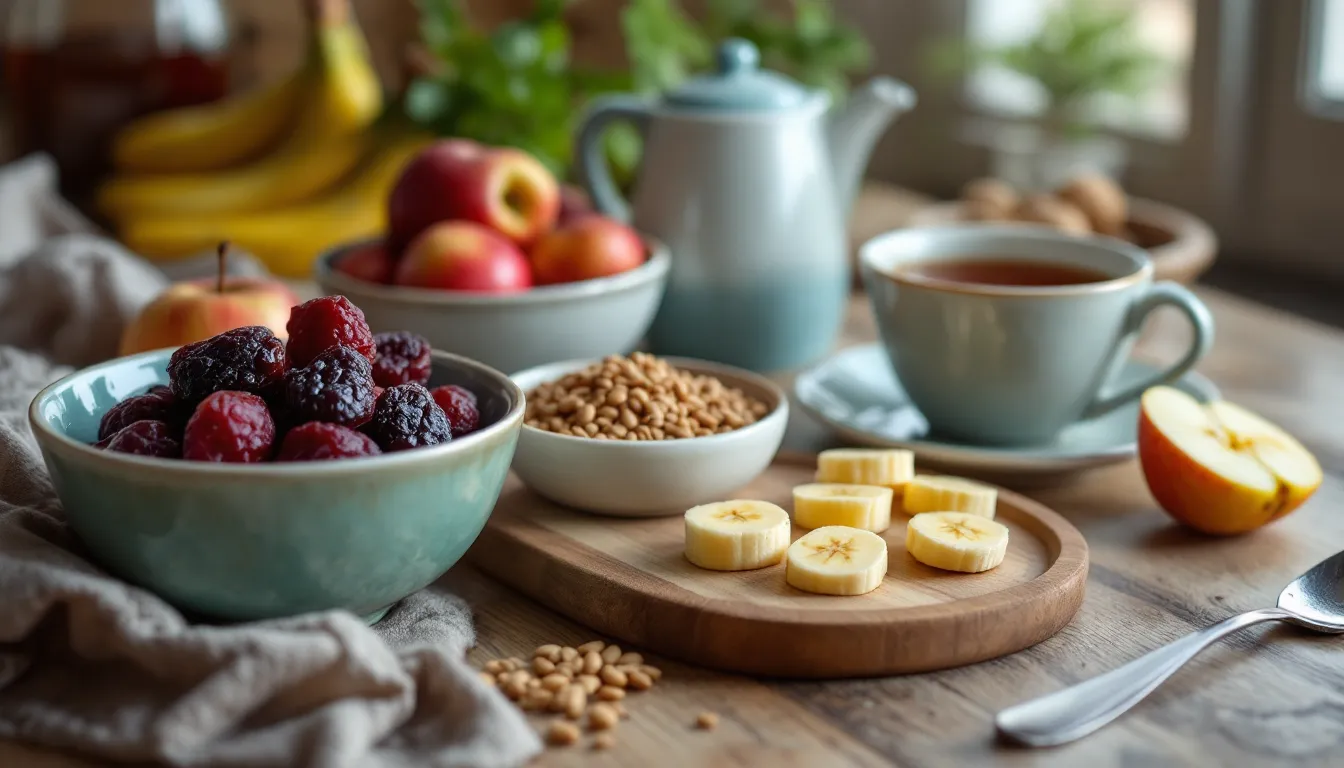
Here’s where things get practical. Food is your first and most powerful tool for constipation relief without harsh laxatives. But from an Ayurvedic lens, it’s not just about fiber grams, it’s about the qualities of the food and how well your body can actually digest it.
Fiber works because it adds bulk and moisture to stool. But if your agni (digestive fire) is weak, dumping a bunch of raw vegetables and bran into your system can actually make things worse. You end up with more ama, more undigested heaviness, and the constipation doesn’t budge. The key is choosing foods that are warm, moist, slightly oily, and easy to break down.
Fruits and Vegetables With Natural Laxative Effects
Cooked fruits are some of the gentlest, most effective foods for sluggish bowels. Stewed prunes and figs are classics for good reason, they’re heavy, moist, and sweet, which directly counteracts Vata’s dry and light qualities. A small bowl of stewed prunes with a pinch of ginger in the morning can work wonders.
Ripe bananas are another favorite of mine. They’re smooth, grounding, and easy on digestion. Cooked apples with cinnamon and a touch of ghee bring warmth and oiliness to the gut.
For vegetables, think cooked and warm. Beets are particularly helpful, they have an earthy sweetness and a natural ability to support downward movement. Cooked spinach, zucchini, and sweet potatoes are all excellent. I’d suggest avoiding too much raw salad if you’re already constipated: raw foods are cold, rough, and light, exactly the qualities that aggravate Vata.
Whole Grains, Seeds, and Legumes for Daily Regularity
Oatmeal cooked with water and a little ghee is one of the simplest daily regularity foods I know. It’s warm, slightly heavy, smooth, and easy to digest. Soaked flaxseeds are another gem, they become mucilaginous (slippery) when soaked, which lubricates the intestinal walls beautifully.
Soaked chia seeds work similarly. Try stirring a tablespoon into warm water the night before and drinking it first thing in the morning.
With legumes, go gentle. Well-cooked mung beans or red lentils are the easiest on digestion. Heavier beans like chickpeas or kidney beans can actually increase gas and bloating if your agni isn’t strong, so save those for when your digestion is back on track.
Try this today: Have a small bowl of soaked flaxseeds in warm water or a serving of stewed prunes with ginger before breakfast. Takes about 10 minutes to prepare. This works well for all types, but if you run hot (Pitta), skip the ginger or use just a tiny pinch.
Herbal Teas That Support Digestive Relief
Tea is one of the simplest and most soothing ways to bring warmth and moisture back to your digestive tract. And in Ayurveda, warm liquids are considered deeply supportive of agni, they gently stoke your digestive fire without overwhelming it.
Gentle Teas for Everyday Use
My go-to everyday blend is cumin, coriander, and fennel tea, sometimes called CCF tea. You steep equal parts of the three seeds in hot water for about 10 minutes. It’s mild, slightly sweet, and works on all three doshas. Cumin kindles agni with its warm, light quality. Coriander cools any excess heat (great for Pitta). Fennel is smooth and slightly sweet, helping to relax the intestinal muscles.
Ginger tea is another staple. Fresh ginger sliced into hot water brings sharp, warm, and light qualities that cut through ama and wake up sluggish digestion. If you’re a Pitta type who tends to run hot, go easy on ginger, a small slice is plenty.
Peppermint tea offers a cool, subtle quality that’s nice for Pitta-type constipation where there’s heat and irritation involved.
Stronger Herbal Options and How to Use Them Safely
Triphala is the Ayurvedic classic for constipation, and for good reason. It’s a blend of three fruits, amalaki, bibhitaki, and haritaki, and it works by gently toning the intestinal walls rather than forcing a purge. It’s not a harsh laxative: it’s a rejuvenative. A half teaspoon steeped in warm water before bed can produce a gentle, natural movement by morning.
Haritaki on its own is sometimes used for more stubborn patterns. It’s warm and light, and it specifically supports Vata in the colon. But I’d recommend starting with the full triphala blend, since it’s more balanced.
Senna is the one to be cautious with. It’s strong, sharp, and stimulating. It works, yes, but it can become habit-forming and it depletes the colon’s natural tone over time. If you use it, keep it very occasional.
Try this today: Brew a cup of CCF tea (cumin, coriander, fennel, a half teaspoon of each in a cup of hot water, steeped 10 minutes) and sip it after lunch. Takes 5 minutes. Suitable for everyone. If you’re considering triphala, start with a small dose and see how your body responds over a few days.
Hydration and Its Role in Healthy Bowel Movements
This one seems so basic it almost feels silly to write about. But I can’t tell you how many people I’ve talked to who are chronically under-hydrated and wondering why they’re constipated.
In Ayurvedic terms, dryness is one of Vata’s defining qualities. When you don’t drink enough, or when you drink too much cold water, which actually dampens agni, the colon absorbs more moisture from stool than it’s supposed to. Everything dries out and compacts.
The fix isn’t just “drink more water.” It’s drink warm or room-temperature water throughout the day. Warm water has a light, mobile, and slightly oily quality that helps things flow. Cold water, on the other hand, is heavy and constricting, it can actually slow digestion down.
A practice I love is sipping warm water every 30 minutes or so during the day, rather than gulping large amounts at once. This keeps your internal channels hydrated without flooding your stomach and diluting digestive enzymes during meals.
Adding a squeeze of lemon or a thin slice of fresh ginger to your warm water gives it a bit of sharpness that helps stimulate agni.
One more thing: warm soups, broths, and stews count toward hydration too. And they’re especially grounding and nourishing for Vata types who tend toward dryness and lightness.
Try this today: Keep a thermos of warm water with you and sip it consistently throughout the day, aiming for small sips every 20–30 minutes. Takes zero extra time once you’ve filled the thermos. Great for all types. If you’re Kapha and feel waterlogged easily, add ginger or a pinch of black pepper to your water.
Daily Routine Changes That Improve Regularity
This is where Ayurveda really shines, and where I think modern wellness advice often falls short. You can eat all the right foods and drink all the right teas, but if your daily rhythm is chaotic, constipation tends to persist.
Ayurveda places enormous value on dinacharya, your daily routine. Your body thrives on rhythm because your doshas follow a natural clock. The early morning hours (roughly 6–10 AM) are governed by Kapha energy, slow, steady, grounding. This is actually the ideal window for elimination, because the body’s downward energy is naturally active.
Movement, Timing, and Stress Management
Gentle movement in the morning, even 10 to 15 minutes of walking, stretching, or simple yoga, stimulates the mobile quality that helps Vata do its job of moving things downward. You don’t need an intense workout. In fact, overly vigorous exercise can increase Vata and make things worse.
Meal timing matters a lot. Eating your largest meal at midday, when Pitta (and hence agni) is at its peak, means better digestion and less ama formation. Eating heavy meals late at night, when agni is low, is one of the quickest ways to create sluggish bowels.
And stress, I have to mention it. When you’re anxious or worried, your nervous system shifts into a state that literally inhibits digestion. Vata increases, the gut tightens, and everything stalls. Even five minutes of slow, deep breathing before meals can help your body shift into a calmer state where digestion actually works.
Building a Bathroom Routine That Works
This part feels a little unglamorous, but it’s genuinely important. Give yourself time in the morning. Don’t rush straight to your phone or your to-do list. Wake up, drink warm water, move gently, and then sit, without pressure or hurry.
The body responds to consistency. If you create a regular morning window for elimination, your colon will start to expect it. I’ve seen people who struggled for months find relief simply by protecting that morning window and treating it as non-negotiable.
A small stool under your feet (raising your knees above your hips) can make a surprising difference, too. It mimics a squatting position, which aligns the colon for easier passage.
Try this today: Set your alarm 20 minutes earlier tomorrow. Drink warm water, do 10 minutes of gentle stretching or walking, then sit without rushing. Protect this window for a full week before judging results. Takes about 20 minutes. Suitable for all body types, Vata types especially benefit from the added stability of a morning routine.
Natural Supplements Worth Considering
Sometimes food and routine alone need a little support, and that’s perfectly fine. A few natural supplements align beautifully with Ayurvedic principles.
Triphala is the one I come back to again and again. It’s not just a laxative, it’s a rasayana, a rejuvenative that supports all three doshas and strengthens the tone of the digestive tract over time. It gently clears ama without depleting ojas (your deep vitality reserve). A half teaspoon in warm water before bed is the traditional dose.
Psyllium husk (also known as isabgol) is widely used in Ayurveda. It’s cool, smooth, and heavy, qualities that soothe Vata’s dryness and add gentle bulk. Stir a teaspoon into a full glass of warm water and drink it before it thickens too much. Always follow it with another glass of water.
Ghee deserves a mention here, even though it’s technically a food. A teaspoon of warm ghee in warm milk or warm water before bed lubricates the intestines from the inside. It’s oily, smooth, and warming in a subtle way, the perfect antidote to Vata’s rough, dry qualities. Ghee also supports agni without aggravating Pitta, which is unusual and valuable.
Magnesium (particularly magnesium citrate) is worth noting from a modern supplement perspective. It draws water into the intestines and relaxes smooth muscle. It’s cool and heavy in quality, which makes it a decent fit for Vata and Pitta patterns.
If you’re more Vata, triphala and ghee are your best friends. Pitta types tend to do well with triphala and psyllium (the cooling quality helps). Kapha types can use triphala with a pinch of dry ginger powder to keep things light and warm.
Try this today: Start with triphala, a half teaspoon in a cup of warm water, taken 30 minutes before bed. Give it 5–7 days to build its effect. Takes 2 minutes to prepare. Good for all types. If you’re pregnant or on medication, talk to a practitioner before starting any herbal supplement.
When to See a Doctor About Chronic Constipation
I want to be straightforward here. Most constipation responds beautifully to the food, tea, and routine changes I’ve described. But there are times when you need professional support, and it’s important to recognize those moments.
If you’ve been consistently constipated for more than three weeks even though dietary and lifestyle changes, it’s worth seeing a doctor. The same goes if you notice blood in your stool, unexplained weight loss, severe abdominal pain, or a sudden change in bowel habits that doesn’t resolve.
Chronic constipation can sometimes point to underlying conditions, thyroid issues, pelvic floor dysfunction, or other concerns that deserve proper evaluation.
From an Ayurvedic view, deeply entrenched constipation often means ama has settled into deeper tissues, and agni has been compromised over a long period. In these cases, a qualified Ayurvedic practitioner can offer personalized protocols, sometimes including gentle cleansing practices, that go beyond general self-care.
There’s no weakness in seeking help. In fact, recognizing when you need a guide is itself a form of wisdom.
Try this today: If your constipation has lasted more than a few weeks, schedule an appointment with your doctor or a qualified Ayurvedic practitioner this week. Takes 10 minutes to book. Appropriate for anyone, especially if you’re managing other health conditions alongside constipation.
Conclusion
Constipation relief without harsh laxatives isn’t about one miracle food or a single magic tea. It’s about understanding what your body is telling you, that somewhere, something has become too dry, too cold, too irregular, or too tense, and gently bringing it back toward balance.
The beauty of this approach is that it works with your body, not against it. When you support your digestive fire, clear accumulated ama, and nourish your ojas, tejas, and prana through warm foods, grounding routines, and a steady rhythm, the relief tends to be lasting rather than temporary.
I’ve watched people transform their digestion, and honestly, their whole energy and mood, by making small, consistent changes. Not dramatic overhauls. Just a thermos of warm water. A bowl of stewed fruit in the morning. Twenty quiet minutes before the day begins.
One seasonal note: during colder, drier months (late autumn and winter), constipation tends to worsen because those environmental qualities mirror Vata’s own nature. That’s the time to lean even harder into warm, oily, grounding foods, more ghee, more soups, more cooked root vegetables. In the warmer, humid months, you can lighten up a bit and rely more on cooling herbs and fresh fruits.
Start small. Pick one thing from this article that feels doable and try it for a week. Then add another. Your body knows how to do this, sometimes it just needs a little reminder.
I’d love to hear what works for you. What’s one change you’re willing to try this week? Drop a comment below or share this with someone who might need a gentler path forward.


