








What Causes Earaches and When Should You See a Doctor
From an Ayurvedic perspective, earaches rarely appear out of nowhere. The ears are considered a seat of Vata dosha, that airy, mobile, subtle energy governing movement and the nervous system. When Vata gets aggravated by cold, dry, or windy conditions, irregular routines, or too much stimulation, the ear canal becomes one of the first places to register discomfort.
But it’s not only a Vata story. Pitta types may experience earaches with a hot, sharp, inflamed quality, redness, burning, even irritability alongside the pain. Kapha-driven ear issues tend to feel heavy, dull, and congested, often accompanied by fluid buildup or a sense of fullness that just won’t clear.
What’s happening deeper inside? When your digestive fire, what Ayurveda calls agni, isn’t processing well, undigested metabolic residue (called ama) can accumulate. This sticky, heavy material tends to migrate toward already-vulnerable areas. If your ears are your weak spot, ama may settle in the channels surrounding the ear, creating pressure, stagnation, and pain. Signs of ama include a coated tongue in the morning, sluggish digestion, or that foggy feeling after meals.
Now, a crucial note: earaches accompanied by high fever, sudden hearing loss, discharge with a strong odor, or pain that worsens rapidly over 24–48 hours deserve professional attention. This is general education, not medical advice. If you’re pregnant, managing a condition, or taking medication, check with a qualified professional.
Do this today: Gently press the tragus (the small flap in front of your ear canal). If this dramatically increases sharp pain or you notice discharge, consider seeing a healthcare provider rather than managing at home. Takes 10 seconds. Appropriate for everyone: skip self-care and seek help if you notice the warning signs above.
Warm and Cold Compresses for Immediate Earache Relief
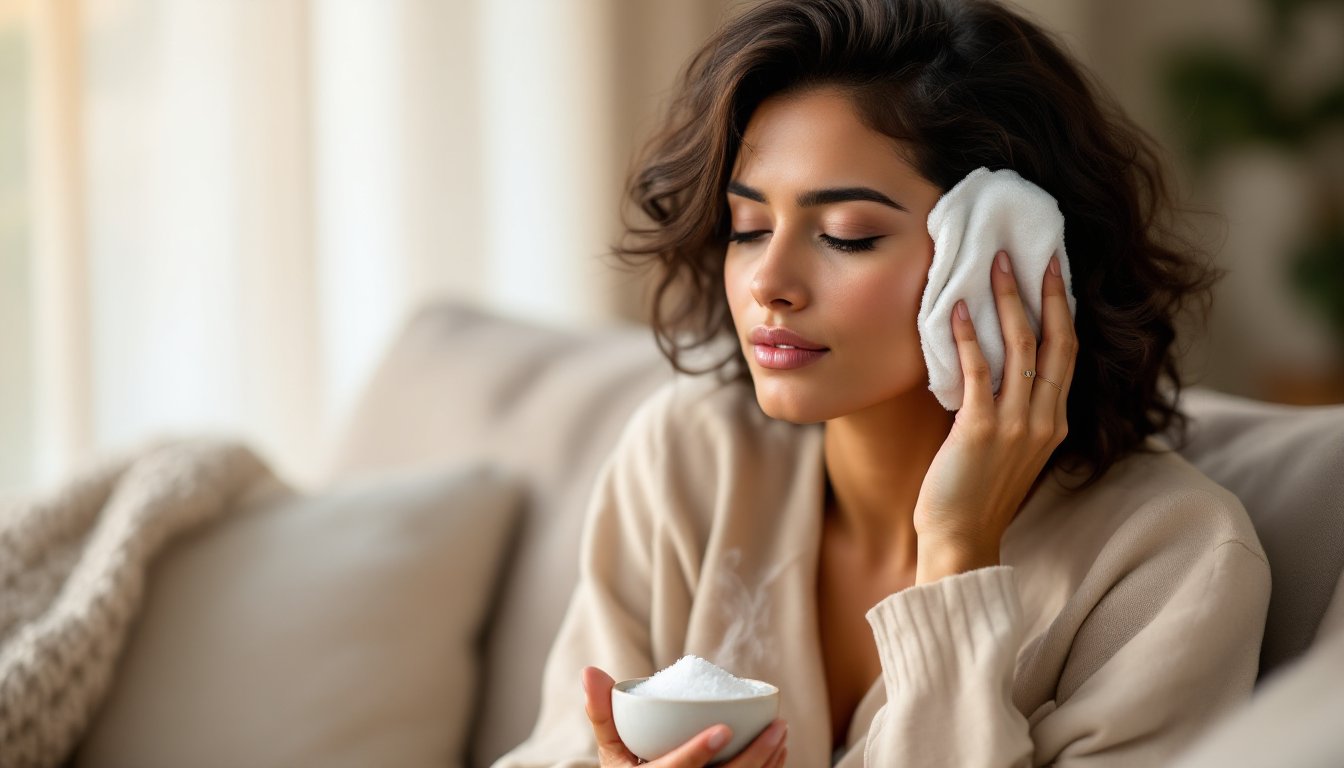
This is where the Ayurvedic principle of “opposites balance” becomes beautifully practical. If your earache has a cold, dry, mobile quality, that sharp, shifting, wind-like pain typical of Vata aggravation, then warmth is your friend. A warm compress introduces the hot and stable qualities that directly counterbalance Vata’s cold restlessness.
I like to suggest a clean cloth soaked in warm (not scalding) water, wrung out, and held against the affected ear for 10–15 minutes. The warmth improves local circulation, encourages stagnant fluids to move, and calms the nervous tissue around the ear. This is especially comforting in cold or dry seasons when Vata naturally runs high.
But what if your earache feels hot, inflamed, and angry, more of a Pitta pattern? That’s when a cool compress makes more sense. A cool cloth applied for shorter intervals (5–10 minutes) can take the edge off that sharp, burning quality without suppressing the body’s natural healing response.
For Kapha-type ear congestion, that heavy, dull fullness, warmth is again helpful, but you might add a light, dry element. A small cloth bag filled with dry roasted salt or rice, gently heated, brings warmth without adding moisture that could worsen the congestion.
What this is really doing on a deeper level: you’re supporting prana, the life-force energy that governs sensory function. When prana flows freely through the ear channels, pain diminishes and clarity returns.
Do this today: Try a warm compress held against the ear for 10–15 minutes, especially in the evening when Vata naturally increases. Suitable for most people. If your ear feels hot and inflamed, switch to a cool compress for shorter intervals. Not suitable if there’s active discharge from the ear, see a professional instead.
Natural Oils and Drops That Help Soothe Ear Pain
In Ayurveda, oil is one of the most important tools for pacifying Vata. The reasoning is elegant: Vata’s core qualities are dry, light, cold, rough, and mobile. Warm oil is oily (obviously), heavy, warm, smooth, and stable, it’s practically Vata’s opposite in liquid form.
A practice called Karna Purana involves gently warming a small amount of sesame oil or specially prepared herbal oil and placing a few drops into the ear canal. This is one of the oldest earache remedies in Ayurvedic tradition, and when done correctly, it can be remarkably soothing. The oil lubricates dry tissue, calms overstimulated nerve endings, and helps loosen any sticky ama that may have settled in the area.
A few things I always mention: the oil needs to be comfortably warm, never hot. Test it on your inner wrist first. And if there’s any chance your eardrum is perforated, meaning you’ve had sudden sharp pain followed by relief, or you notice fluid draining, do not put anything into the ear. That’s a firm boundary.
For Pitta-type ear pain with that hot, sharp quality, coconut oil makes a better base because it carries cool and smooth qualities. Some people also find that a drop of warm garlic-infused oil (garlic gently cooked in sesame oil and strained) offers comfort, garlic has a warming but also penetrating quality that Ayurveda values for moving stagnation.
This practice supports tejas, the subtle metabolic intelligence that governs transformation at the tissue level. When tejas is balanced, inflammation resolves more efficiently and tissues heal with less residual sensitivity.
Do this today: Warm a teaspoon of sesame oil (or coconut oil if you run hot) to body temperature, test on your wrist, and place 2–3 drops in the affected ear while lying on your side. Rest for 5–10 minutes. Best done in the evening. Suitable for Vata and Kapha types especially. Not for anyone with suspected eardrum perforation or active ear infection with discharge.
Sleep Positions, Jaw Exercises, and Other Physical Techniques
Here’s something people often overlook: the way you position your body, especially your head, can either ease or worsen an earache. Sleeping with the affected ear elevated allows gravity to assist drainage, reducing that heavy, congested feeling associated with Kapha-type ear issues. If both ears hurt, try sleeping slightly propped up.
From an Ayurvedic standpoint, this makes sense because we’re encouraging downward movement (apana vayu, a subdivision of Vata) to function properly, helping fluids move where they belong rather than pooling in the ear channels.
Jaw tension is another sneaky contributor. Many earaches, especially the dull, achy kind, are connected to clenching or grinding, which creates a rough, mobile, unstable quality in the tissues surrounding the ear joint. Gentle jaw exercises can help. Try slowly opening your mouth as wide as comfortable, holding for a few seconds, then releasing. Repeat five times. You can also place your fingertips just in front of your ears and massage in small circles, this is a beautiful way to bring the smooth and stable qualities back into an area dominated by tension.
Gentle neck stretches matter too. The ear doesn’t exist in isolation: it’s connected to muscles, nerves, and channels that run through your neck and jaw. Slow, mindful side-to-side neck stretches, done without forcing, can relieve referred pain that masquerades as an earache.
These physical techniques support healthy ojas, that deep reservoir of vitality and resilience. When the body isn’t locked in tension patterns, ojas circulates more freely and tissues recover faster.
Do this today: Before bed tonight, try the gentle jaw opening exercise (5 repetitions) followed by slow neck stretches, then sleep with the sore ear facing up. Takes about 5 minutes. Suitable for everyone. If jaw movement causes clicking or sharp pain in the joint, ease off and consider seeing a practitioner who works with TMJ issues.
Over-the-Counter Pain Relief and When to Use It
I want to be honest here: sometimes you need relief right now, and reaching for an over-the-counter pain reliever is a perfectly reasonable choice. Ayurveda isn’t about suffering through pain to prove a point. In fact, allowing pain to persist unchecked aggravates Vata further, that mobile, sharp, erratic quality intensifies, which can make everything worse.
Common options like ibuprofen or acetaminophen can reduce inflammation and dull the sharp edge of ear pain. From an Ayurvedic lens, we might think of these as temporarily reducing the hot and sharp qualities of Pitta-driven inflammation, giving your body breathing room to begin its own healing process.
Here’s where I’d gently suggest layering, though. Use the pain relief to buy yourself comfort, and then support the deeper process with the Ayurvedic tools we’ve discussed, warm oil, compresses, jaw release, and the dietary adjustments I’ll cover in the next section. This way, you’re addressing the surface discomfort and the underlying dosha imbalance simultaneously.
A word about ear drops available over the counter: some contain numbing agents that temporarily dull pain in the ear canal. These can be helpful, but again, never use drops of any kind if you suspect a perforated eardrum.
The goal isn’t to avoid modern tools. It’s to use them wisely while also tending to the root pattern so the earache doesn’t keep returning.
Do this today: If pain is interfering with sleep or daily function, consider an appropriate OTC pain reliever following package directions, and pair it with one Ayurvedic comfort measure (warm compress or oil drops). Allow 20–30 minutes to feel the combined effect. Suitable for most adults. Not suitable for children without pediatric guidance, or anyone with contraindications to specific medications.
How to Prevent Recurring Earaches at Home
This is where the real magic of Ayurveda lives, not just in treating the flare-up, but in reshaping the patterns that invite it back.
Strengthen Your Agni
Weak digestive fire is often the quiet engine behind recurring ear issues. When agni is low, ama builds. When ama builds, it migrates to vulnerable channels, including those around the ears. To keep agni bright, try eating your largest meal at midday when digestive capacity naturally peaks (this aligns with Pitta time, roughly 10 AM–2 PM). Avoid ice-cold drinks with meals, which dampen that metabolic spark. A small piece of fresh ginger with a pinch of mineral salt before lunch can kindle agni gently.
Personalized Guidance: If You’re More Vata, Pitta, or Kapha
If you’re more Vata, meaning you tend toward anxiety, light sleep, dry skin, and variable digestion, your earache prevention plan centers on warmth, regularity, and nourishment. Favor warm, cooked, slightly oily foods. Keep your ears covered in cold or windy weather. A weekly practice of warm sesame oil applied to the outer ear and behind the ear before bed can work wonders. Avoid skipping meals, staying up past 10 PM, and excessive screen time (all of which aggravate Vata’s mobile, dry qualities).
Do this today: Warm a small amount of sesame oil and gently massage around your outer ears before sleep tonight. Takes 3 minutes. Best for Vata types. Not ideal if you have oily skin or active Kapha congestion.
If you’re more Pitta, meaning you tend toward intensity, sharp focus, warm body temperature, and occasional irritability, your earaches likely carry heat. Favor cooling foods: cucumber, cilantro, coconut, ripe sweet fruits. Avoid excessive spicy food, direct midday sun exposure, and overwork. A drop of room-temperature coconut oil in each ear once a week can help maintain cool, smooth tissue. Avoid acidic foods and fermented items when ear sensitivity flares.
Do this today: Add cooling cilantro or fresh mint to your lunch. Takes 2 minutes of prep. Best for Pitta types. Not ideal if you’re feeling cold, heavy, or congested.
If you’re more Kapha, meaning you tend toward heaviness, slow digestion, congestion, and a calm but sometimes sluggish disposition, your earaches often involve that dull, full, blocked feeling. Favor light, warm, well-spiced foods. Reduce dairy, wheat, and sugar, which increase the heavy and oily qualities that feed Kapha stagnation. Dry-brush your skin in the morning to stimulate circulation. Avoid sleeping during the day, which increases Kapha’s dense quality and slows channel clearing.
Do this today: Try dry-brushing your body before your morning shower, using light upward strokes toward the heart. Takes 5 minutes. Best for Kapha types. Not suitable if you have sensitive, inflamed, or broken skin.
Daily Routine Habits That Protect Your Ears
Two daily practices I come back to again and again for ear health:
First, nasya, applying a small amount of warm oil (sesame or a nasya-specific herbal oil) to the inner nostrils each morning. The nasal passages and ear channels are connected, and keeping the nasal tissue lubricated and clear helps prevent the dry, rough qualities from migrating to the ears. This is especially helpful during Vata season (late fall and winter).
Second, oil pulling, swishing a tablespoon of warm sesame or coconut oil in your mouth for 5–10 minutes each morning before eating. This draws ama from the oral and upper respiratory channels, reduces jaw tension, and keeps the subtle channels around the ears from accumulating buildup.
Do this today: Try oil pulling tomorrow morning, swish warm sesame oil for 5 minutes, then spit it out and rinse. Suitable for most people. If you have a strong gag reflex, start with just 1–2 minutes and build up.
Seasonal Adjustments for Ear Health
In cold, dry, windy seasons (Vata season, typically late autumn through early winter), earaches tend to spike. This is when you want to double down on warmth, oil, and routine stability. Cover your ears when going outside. Increase warm soups and stews. Go to bed a little earlier.
In hot seasons (Pitta season, late spring through summer), ear inflammation may increase. Shift toward cooling oils, lighter meals, and avoid overheating.
In cool, damp seasons (Kapha season, late winter through spring), congestion-related ear fullness peaks. Favor lighter, drier foods, more movement, and warming spices like ginger and black pepper.
Do this today: Identify which season you’re currently in and choose one adjustment from above. Takes a moment of reflection and one small dietary or lifestyle shift. Suitable for everyone.
A Brief Modern Bridge
Modern research on the vagus nerve, that long cranial nerve threading from your brainstem through your ear and into your gut, echoes what Ayurveda has described for centuries. The ear-gut-nervous-system connection is real. When your digestion is off, your nervous system registers stress, and your ear (rich in vagal nerve branches) can become a site of referred discomfort. Supporting agni and reducing ama isn’t mystical, it’s working with a physiological axis that modern science is only beginning to map.
Do this today: Place your hand over your belly after your next meal. Notice whether you feel light and clear or heavy and dull. That simple awareness is the beginning of understanding your agni. Takes 30 seconds. Suitable for everyone.
Conclusion
Earaches have a way of making the world feel smaller, all your attention funnels into that one throbbing spot. But when you step back and look at the bigger picture, an earache is often your body’s way of saying something in the system needs tending. Maybe it’s dryness. Maybe it’s accumulated heat. Maybe it’s stagnation from a sluggish season or an overtaxed digestion.
The earache remedies I’ve shared here, compresses, warm oils, physical techniques, smarter routines, and personalized dosha guidance, aren’t quick fixes. They’re invitations to listen more carefully to what your body has been trying to tell you.
Start with one thing tonight. Just one. And notice what shifts.
I’d love to hear from you, what’s your experience with earaches, and have you found anything that brings you comfort? Drop a thought in the comments or share this with someone who could use a little relief.