





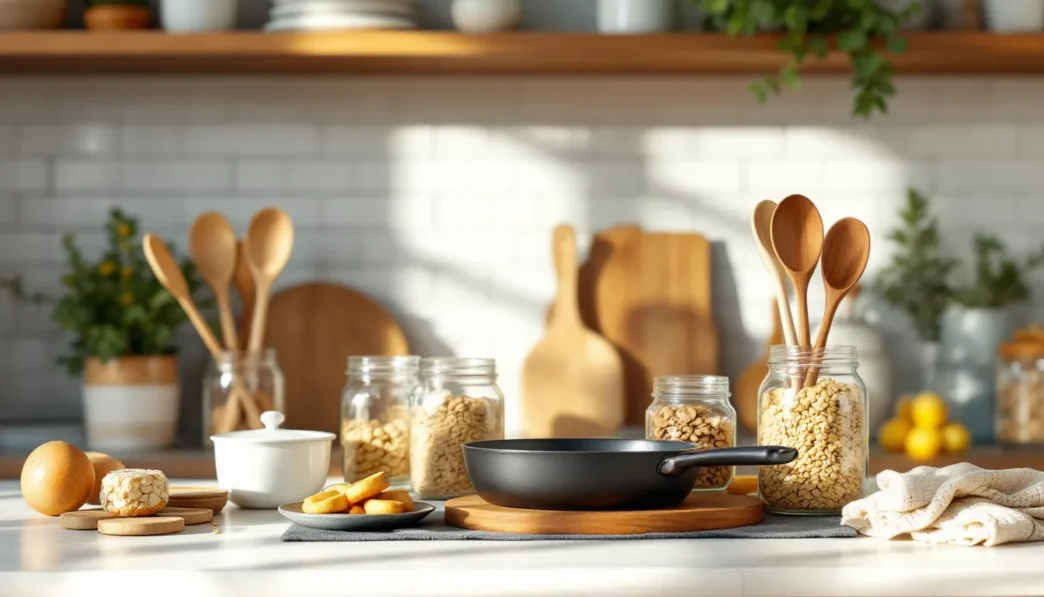
Why Your Kitchen Is the Best Place to Start Going Plastic-Free
Here’s something that surprised me when I first looked into it: the kitchen generates more single-use plastic waste than any other room in the average home. Between food packaging, storage containers, cling wrap, utensils, sponges, and trash bags, it adds up fast.
But that’s actually good news. It means small changes here have an outsized impact.
The kitchen is also where swaps feel the most tangible. You can see the difference, a glass jar where a crinkly bag used to be, a wooden spoon replacing a melting plastic one. There’s something satisfying about opening a drawer and not hearing that hollow plastic rattle anymore.
And practically speaking, most plastic-free kitchen alternatives last longer, perform better at high heat, and don’t leach chemicals into your food. So you’re not sacrificing convenience, you’re upgrading it.
The key is starting where you’ll notice the biggest difference. For most people, that’s cookware and food storage. Let’s go there first.
Plastic-Free Cooking Swaps You Can Make Today

Cooking is where plastic does some of its sneakiest damage. High heat accelerates the breakdown of plastic coatings and synthetic materials, releasing microplastics and chemical compounds directly into your food. Swapping out just a few items here makes a real difference.
Replacing Nonstick Cookware With Safer Alternatives
Traditional nonstick pans rely on PTFE (Teflon) or newer ceramic-polymer coatings that degrade over time, especially when scratched or overheated. Once that coating starts flaking, you’re essentially cooking with plastic.
My top three replacements:
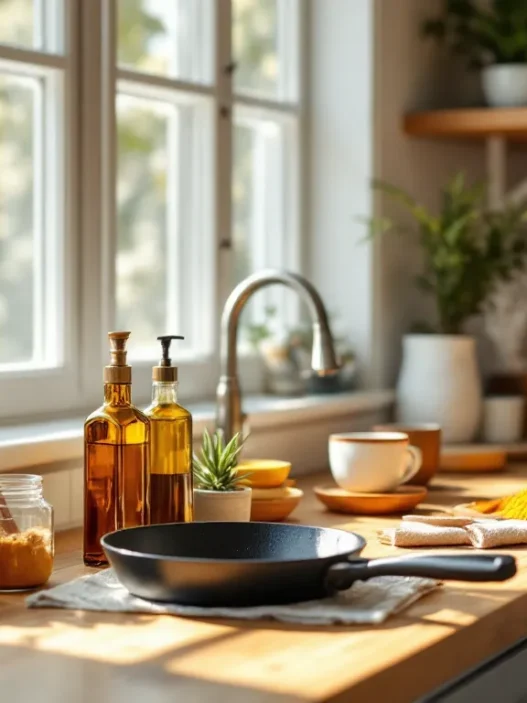
Cast iron is my workhorse. It’s heavy, yes, but it lasts literally forever, develops a natural nonstick surface with seasoning, and goes from stovetop to oven without complaint. I picked up a 12-inch skillet at a thrift store for $8, and it’s become the pan I reach for most.
Stainless steel is ideal for anything acidic, tomato sauces, deglazing with wine, searing proteins. It doesn’t react with food, cleans up well, and can handle serious heat. The learning curve is just about preheating properly and using enough fat.
Carbon steel splits the difference. Lighter than cast iron, it seasons the same way and heats more evenly. It’s become hugely popular with home cooks in the last couple of years, and for good reason.
If you’re attached to ceramic-coated pans, look for ones with verified PFAS-free certifications. They won’t last as long as cast iron, but they’re a solid middle step.
Ditching Plastic Utensils for Durable, Natural Options
Plastic spatulas and spoons seem harmless until you leave one resting against a hot pan and notice the edge has melted. I’ve been there.
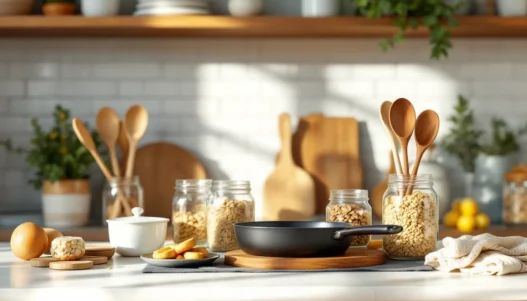
Wooden and bamboo utensils are gentle on cookware, naturally heat-resistant, and surprisingly durable when you oil them occasionally. I keep a set of olive wood spoons that have held up beautifully for over four years.
Stainless steel utensils, tongs, ladles, whisks, handle high heat without any risk of breakdown. They’re easy to sanitize and basically indestructible.
One small thing I’d suggest: replace utensils as they wear out rather than tossing everything at once. That way, you’re not creating more waste in the name of reducing waste, which always felt a bit backwards to me.
Sustainable Food Storage Solutions That Actually Work
This is where most people start their plastic-free kitchen journey, and honestly, it’s where the swaps are most satisfying. Saying goodbye to that cabinet avalanche of mismatched Tupperware lids? That alone is worth the switch.
Glass, Stainless Steel, and Silicone Containers Compared
Glass containers are my go-to for almost everything. They don’t stain, don’t absorb odors, go straight from fridge to microwave (or oven, if they’re borosilicate), and you can actually see what’s inside without opening them. Brands like Pyrex, Glasslock, and IKEA’s 365+ line are all widely available and reasonably priced in 2026.
The downside? They’re heavier, and they break if you drop them on tile. I’ve lost two that way. But the ones that survive just keep going.
Stainless steel containers are great for lunches, kids’ snack boxes, and anything you’re transporting. They’re lighter than glass, virtually unbreakable, and won’t leach anything into your food. The tradeoff is that they’re not microwave-safe and you can’t see through them.
Food-grade silicone bags and containers (like Stasher bags) fill the flexible-storage gap that rigid containers can’t. They’re great for freezing soups, marinating, and sous vide cooking. They do retain some odors over time, garlic is persistent, but they’re dishwasher safe and last for years.
My honest recommendation: build a mixed system. Glass for fridge and reheating, stainless steel for transport, silicone for freezer and flexible needs.
Beeswax Wraps, Silicone Lids, and Other Cling Wrap Replacements
Cling wrap was one of the last plastics I gave up because I genuinely thought there wasn’t a good substitute. I was wrong.
Beeswax wraps mold around bowls, cheese, bread, and cut produce using the warmth of your hands. They’re washable, compostable at the end of their life, and come in fun patterns if that matters to you (it matters to me). They’re not great for raw meat or anything very wet, but for 80% of what I used cling wrap for, they work perfectly.
Silicone stretch lids are another favorite. They suction onto bowls, pots, and even directly onto cut watermelon or avocado halves. I have a set of six in different sizes, and I use them constantly.
Plate-on-a-bowl is the oldest trick in the book and costs nothing. Need to cover a bowl of leftovers in the fridge? Put a plate on it. Done.
Rethinking Food Prep: From Cutting Boards to Mixing Bowls
Prep work is another quiet plastic zone most people overlook. Those thin, flexible plastic cutting boards? The colorful melamine mixing bowls? They shed microplastics with every use, especially when scratched by knives or exposed to heat.
Wooden cutting boards, especially end-grain hardwoods like maple or walnut, are naturally antimicrobial, easier on your knife edges, and last decades with basic care. I oil mine with food-grade mineral oil every few weeks, and they look better with age.
Bamboo boards are a more affordable option. They’re harder than most woods, dry quickly, and are sustainably harvested. Just avoid boards glued with formaldehyde-based adhesives, look for food-safe labeling.
For mixing bowls, stainless steel is light, stackable, and won’t crack or absorb stains. Ceramic bowls add heft and beauty if you like prep work that feels a little more grounded. I use both, stainless for quick jobs, ceramic for baking projects where I want everything laid out nicely.
Even small things matter here. Swap plastic measuring cups for stainless steel. Trade plastic colanders for metal ones. Replace that plastic salad spinner with a stainless steel model, they exist now, and they actually spin better.
How to Organize a Plastic-Free Pantry and Fridge
A plastic-free pantry isn’t just better for the environment, it’s better for your sanity. Everything is visible, stackable, and weirdly calming to look at.
I store dry goods, rice, oats, flour, lentils, nuts, pasta, in glass mason jars and large glass canisters with airtight lids. Labeling them with a chalk marker makes the whole setup functional and easy to maintain. When a jar is getting low, I know it’s time to restock.
For the fridge, I use a combination of glass containers for prepped meals and leftovers, cloth produce bags for fruits and vegetables, and silicone bags for anything that needs to lie flat in the freezer.
One tip that made a big difference for me: I designated one shelf in my fridge as the “eat first” shelf. Anything that needs to be used soon goes there, visible and front-center. It cut my food waste noticeably, which, in its own way, is another form of reducing waste beyond just plastic.
Bulk shopping pairs naturally with a plastic-free pantry. More grocery stores and co-ops offer bulk bins in 2026 than ever before, and bringing your own jars or cloth bags is no longer unusual. Some stores even offer a tare weight system so you’re not paying for the weight of your container.
If bulk bins aren’t accessible where you live, buying in larger quantities, a 5-pound bag of rice instead of five 1-pound bags, still reduces packaging per serving.
Eco-Friendly Kitchen Cleaning Without Single-Use Plastics
Cleaning is the area where single-use plastics hide in plain sight. Sponges, scrub brushes, dish soap bottles, trash bags, it all adds up week after week.
I switched to natural cellulose sponges and wooden dish brushes with replaceable heads. The sponges are compostable when they wear out, and the brushes last months with just a new head swap. A good wooden brush with stiff plant-fiber bristles handles stuck-on food better than any plastic scrubber I’ve used.
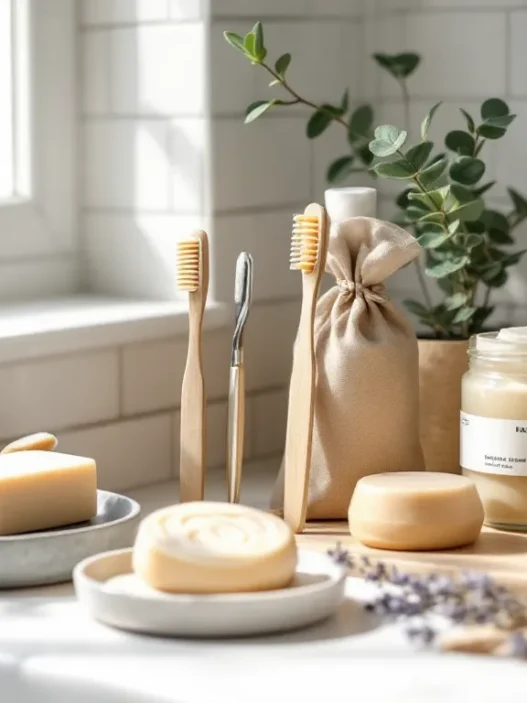
For dish soap, refill stations are becoming common at grocery stores and zero-waste shops. If that’s not an option near you, solid dish soap bars work surprisingly well. They lather nicely, cut grease effectively, and one bar outlasts two or three plastic bottles of liquid soap.
Cloth towels and unpaper towels replace paper towels for most jobs. I keep a small basket of cotton cloths on the counter, toss them in the wash every few days, and cycle through them. For really messy tasks, think raw meat cleanup, I still use a paper towel occasionally. Perfection isn’t the goal.
Compostable trash bags or newspaper-lined bins handle kitchen waste without conventional plastic bags. And if you compost food scraps (even a small countertop bin works), you’ll find you’re generating far less trash overall.
One swap I particularly love: DIY cleaning spray. Equal parts water and white vinegar in a glass spray bottle, with a few drops of essential oil if you want a scent. It handles countertops, stovetops, and general kitchen surfaces beautifully. I haven’t bought a plastic spray bottle of kitchen cleaner in over two years.
Budget-Friendly Tips for Transitioning Gradually
Let me be honest: going plastic-free can feel expensive upfront. A good set of glass containers costs more than a pack of disposable plastic ones. Cast iron is pricier than a cheap nonstick pan.
But this is a long game, and the math works out in your favor over time. That cast iron skillet will outlive you. Those glass jars won’t need replacing every six months when they stain and warp.
Here’s how I’d approach it on a budget:
Start with what you already have. Don’t throw away functional plastic containers, use them until they crack or wear out, then replace with a sustainable alternative. The most eco-friendly option is always the one you already own.
Thrift stores are goldmines. Cast iron skillets, glass Pyrex dishes, stainless steel mixing bowls, wooden cutting boards, they show up constantly at secondhand stores, estate sales, and online marketplaces for a fraction of retail price.
Swap one category at a time. Maybe this month it’s food storage. Next month, utensils. The month after, cleaning supplies. Spreading the cost makes it manageable and gives you time to figure out what actually works for your routine.
Choose multi-purpose items. A mason jar is a drinking glass, a storage container, a lunch vessel, and a flower vase. A cast iron skillet bakes, sears, roasts, and even makes dessert. Fewer items that do more means less spending.
Look for starter kits. Many eco-friendly brands now offer bundle deals, a beeswax wrap set, a basic glass container collection, a cleaning essentials pack, at lower per-item prices than buying individually.
The transition doesn’t need to happen overnight. Even replacing five plastic items this year makes a measurable difference. And once you start, momentum builds naturally, because the alternatives genuinely work better.
This is general education, not medical advice. If you’re pregnant, managing a condition, or taking medication, check with a qualified professional.
Conclusion
An eco-friendly kitchen isn’t a destination, it’s a direction. Every glass jar that replaces a plastic bag, every wooden spoon that outlasts its synthetic predecessor, every refilled soap bottle, these are small choices that compound into something meaningful.
What I’ve found, two-plus years into this journey, is that it’s not really about sacrifice. My kitchen works better now. Food tastes better in cast iron. Leftovers keep longer in glass. The pantry is organized in a way that actually makes sense. And there’s a quiet satisfaction in knowing that my daily cooking routine isn’t sending a stream of disposable plastic into the world.
You don’t need to do it all today. Pick one swap from this guide, whichever one caught your eye, and try it this week. See how it feels. I think you’ll find that once you start, you won’t want to stop.
I’d love to hear what swap you’re starting with, or what’s already working in your kitchen. Drop a comment and share your experience, we’re all figuring this out together.
What’s the one plastic item in your kitchen you’d most like to replace?